asphalt shingle vs metal roofing in Houston / HOUSTON
Asphalt Shingle vs Metal Roofing for Houston Property Projects
Compare complete asphalt shingle and metal roof assemblies for a Houston property instead of selecting by surface appearance alone.
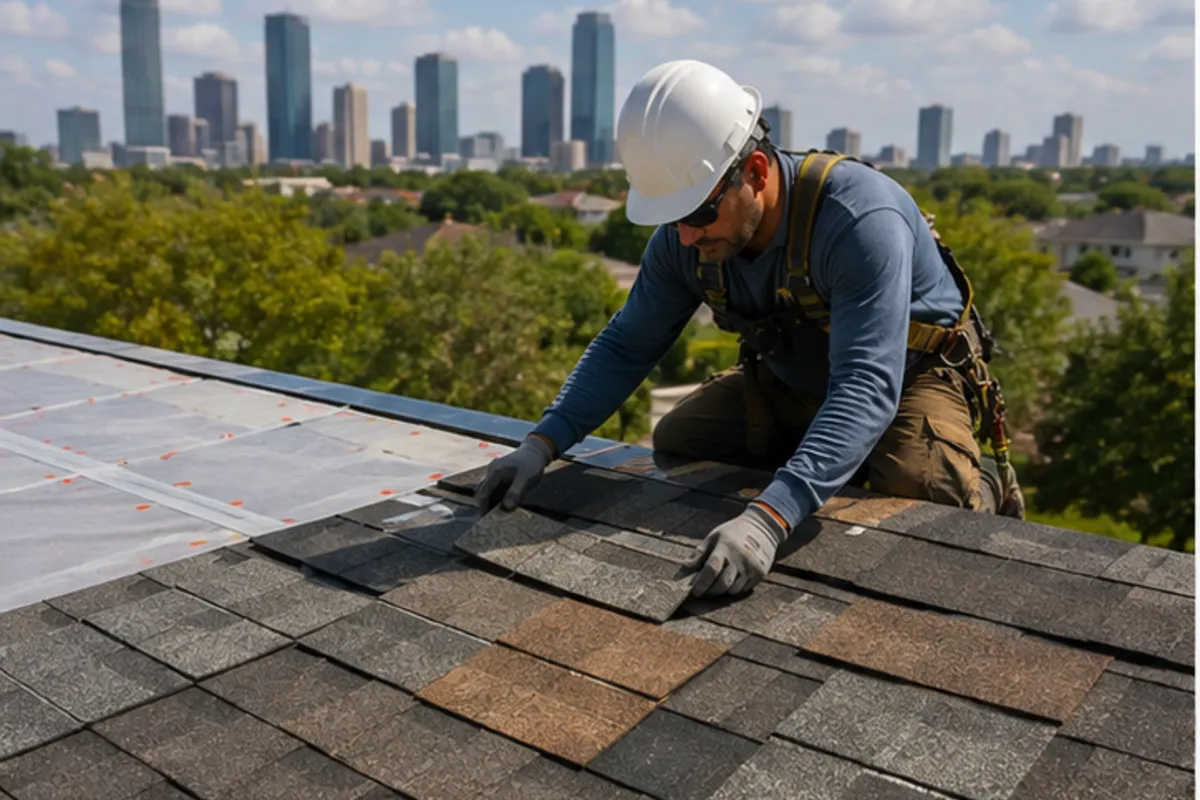
Asphalt shingle vs metal roofing in Houston Scope Objective
Compare complete asphalt shingle and metal roof assemblies for a Houston property instead of selecting by surface appearance alone. The recommended commercial path is a material-specific scope with all assembly layers, detail responsibilities, maintenance considerations, and selection approvals.
- Inspect
- covering profile, deck requirements, underlayment, fastening, flashing, ventilation, penetrations, edge metal, and future repair access
- Record
- assembly schedules, detail drawings, sample areas, transition plans, accessory lists, and installation checkpoints
- Compare
- architectural shingles, standing-seam metal, exposed-fastener metal, and mixed-material roof sections
Asphalt shingle vs metal roofing in Houston Commercial Decision Frame
A commercial decision about asphalt shingle vs metal roofing in Houston starts with the property consequence and the roof condition, not with a product pitch. The useful opening record states a roof replacement project needs a material decision that fits roof geometry, transitions, operations, maintenance expectations, and budget structure. That description gives the inspection a purpose: identify the roof area involved, determine which observations can be verified without destructive work, and define the next authorization point. The owner can then distinguish a request for temporary water control from a permanent repair, a broad replacement estimate, or a monitoring record.
The contractor conversation becomes stronger when the property owner asks for a condition-to-scope connection. A recommendation should identify the observed material, transition, drainage path, or interior indicator and explain why that finding leads to a specific action. The article therefore treats asphalt shingle vs metal roofing in Houston as a sequence of commercial decisions. Each decision requires an input, evidence, a boundary, and a handoff. That sequence reduces vague allowances and makes proposals easier to compare.
Asphalt shingle vs metal roofing in Houston Property Intake Record
A useful request begins with the Houston address and ZIP code, property type, roof type if known, roof age if documented, visible concern, active interior water status, and access information. Recent photos can show the timing and progression of a condition, but they do not replace an inspection. For occupied properties, the requester should also identify affected rooms, tenant or manager contacts, business hours, parking limits, and any sensitive interior areas below the roof.
The intake should separate verified facts from estimates. A purchase record may identify an installation year, while a visual guess does not. A tenant report may locate a drip, while it does not establish the roof source. The owner can include prior repair invoices, material information, and known roof sections when available. This record gives the roofer a practical starting point and supports an appointment focused on covering profile, deck requirements, underlayment, fastening, flashing, ventilation, penetrations, edge metal, and future repair access rather than a generic roof walk.
Asphalt shingle vs metal roofing in Houston Roof and Interior Location Map
Roof findings need location references that another reviewer can understand. The file can divide a residential roof by front, rear, left, and right slopes, then add ridges, valleys, dormers, walls, chimneys, and penetrations. A commercial roof can use building grids, tenant bays, drains, parapets, equipment rows, and access points. Interior symptoms should carry room, ceiling, wall, or bay references that can be related back to the roof geometry.
A location map prevents close photographs from becoming disconnected evidence. It also shows whether several reported symptoms converge near one roof detail or belong to separate conditions. For asphalt shingle vs metal roofing in Houston, the map should cover covering profile, deck requirements, underlayment, fastening, flashing, ventilation, penetrations, edge metal, and future repair access. Wide views establish orientation, medium views show relationships, and detail views record the material interface. This structure supports repair quantities, replacement measurements, safe access planning, and a completion record that mirrors the original finding.
Asphalt shingle vs metal roofing in Houston Visible Condition Evidence
The inspection record should contain assembly schedules, detail drawings, sample areas, transition plans, accessory lists, and installation checkpoints. Photographs are most useful when they preserve context. A mark on a shingle, a gap at flashing, an open seam, or a stained deck area should be shown together with the surrounding plane and nearby water-control details. Notes should use neutral condition language such as lifted, separated, corroded, cracked, displaced, wet, soft, ponded, or inaccessible rather than assigning an unsupported cause.
Measurements belong where they affect the commercial scope. Useful examples include the size of a membrane defect, linear feet of flashing, quantity of missing shingles, distance between an interior stain and a penetration, or area of suspected deck damage. The file should state limitations created by height, pitch, weather, locked access, fragile material, or concealed construction. Accurate limitations protect the decision from false certainty and identify the next step needed for confirmation.
Asphalt shingle vs metal roofing in Houston Cause and Condition Separation
Observed conditions and probable causes are related but not identical. A ceiling stain is observable; the entry point may be upslope, beside a wall, around a penetration, through a low-slope seam, or outside the roofing system. Missing shingles are observable; the surrounding material may also have fastening, seal-strip, or brittleness concerns. The report should state the evidence supporting each probable pathway and the conditions that remain unverified.
This distinction is especially important when the project follows heavy rain, wind, or hail. Weather timing can guide inspection without proving that every roof mark came from one event. Existing wear, prior repairs, installation details, foot traffic, and material aging may remain relevant. Highline's condition-led method does not predict insurance coverage or claim outcomes. It builds a field record that allows the property owner to discuss visible roof work using documented facts.
Asphalt shingle vs metal roofing in Houston Repair Boundary and Removal Limits
A repair becomes commercially usable when its boundary is clear. The scope should describe the roof plane or detail, material to remove, surrounding covering that may need temporary release, substrate or deck exposure, flashing or accessory components, replacement materials, fastening or welding method, and final water-shedding configuration. The scope should also identify conditions that could expand the work and the approval method used before expansion.
The central comparison for this project is architectural shingles, standing-seam metal, exposed-fastener metal, and mixed-material roof sections. Repair can be appropriate when the defect is isolated and compatible surrounding material can be integrated. Broader section work may be required when the surrounding roof cannot be opened and restored predictably. Replacement becomes a system decision when widespread deterioration, repeated leaks, multiple generations of patches, or assembly-level discontinuity makes another local repair difficult to control.
Asphalt shingle vs metal roofing in Houston Material and Detail Compatibility
Roofing materials respond differently to cutting, lifting, fastening, heat welding, coating, movement, and sealants. Asphalt shingles require attention to temperature, flexibility, seal strips, nails, underlayment, and matching. Metal roofs require panel-profile, seam, fastener, movement, closure, coating, and dissimilar-metal awareness. Low-slope membranes require compatible cleaners, primers, patches, welding or adhesion, substrate preparation, and drainage continuity.
A proposal for asphalt shingle vs metal roofing in Houston should name the roof material and the connected detail instead of using a general phrase such as “seal leak.” Flashing, valleys, curbs, drains, scuppers, parapets, edge metal, penetrations, and ventilation components are part of the assembly. Their removal and restoration may control the repair more than the surface covering. Material schedules and detail descriptions make quote comparisons more reliable than product names without installation context.
Asphalt shingle vs metal roofing in Houston Quote Structure and Cost Control
A useful quote connects price to measured scope. Line items can identify mobilization, access equipment, protection, tear-off or removal, materials, flashing details, deck allowances, temporary protection, disposal, testing, and documentation. An owner should be able to trace the total to a roof area or component. If a condition is concealed, the quote can use a clearly defined unit allowance and a written approval step instead of an open-ended promise.
The highest total is not automatically the most complete scope, and the lowest total is not automatically the most efficient choice. Compare whether each proposal covers the same roof areas, layers, accessories, property protection, weather plan, and completion evidence. Avoid flat price assumptions based only on a phone description or interior photo. For asphalt shingle vs metal roofing in Houston, scope clarity is the most useful foundation for a cost conversation because it identifies what is priced and what remains conditional.
Price becomes comparable only after the roof area, material, detail, access, and conditional work are visible.
Asphalt shingle vs metal roofing in Houston Houston Property Protection Plan
Roof work affects more than the covering. Residential scopes should address driveway use, landscaping, windows, siding, attic contents, occupied rooms, pets, gates, material delivery, and daily debris control. Multifamily and commercial scopes may add tenant notices, entrances, loading zones, public pathways, rooftop equipment, inventory, ceiling-sensitive areas, noise windows, and security. These responsibilities belong in the project file before crews and materials arrive.
A protection plan should name the areas below active work and the person responsible for interior communication. Weather staging should identify the daily dry-in boundary and the response if uncovered conditions are found. The plan can also record magnetic cleanup, gutter protection, equipment shutdown coordination, and photographs of pre-existing exterior conditions. This operational record supports asphalt shingle vs metal roofing in Houston by making property continuity part of the approved roofing scope.
Asphalt shingle vs metal roofing in Houston Weather and Temporary Water Control
Houston weather makes staging and temporary water control important, but weather exposure does not justify unsupported emergency claims. The project plan should distinguish interior containment, exterior tarping, temporary patching, permanent repair, and full replacement. Each temporary measure needs a safe-access assessment, securement method, coverage boundary, runoff path, limitations, date, monitoring instruction, and named permanent next step.
Temporary work should not disappear from the final scope. Fasteners may penetrate materials, tarps can redirect water, and temporary sealants can complicate later removal. Photographs taken before and after temporary protection preserve the original condition and the installed boundary. If safe roof access is unavailable, the record should state that limit and focus on interior protection or another authorized approach. No response time should be represented until staffing and service capability are verified.
Asphalt shingle vs metal roofing in Houston Completion Verification and Handoff
The target handoff for this decision is a material-specific scope with all assembly layers, detail responsibilities, maintenance considerations, and selection approvals. The completion review should return to the initial condition map, show each repaired or replaced area, record connected flashings and accessories, note unresolved items, and identify monitoring points. Cleanup and property-protection checks should be documented separately from roof-detail completion so that both parts of the work remain visible.
A handoff can include material information actually used, approved changes, completion photos, maintenance notes, and communication about any future observation. Warranty language, if offered, must match verified written terms and exclusions; it should never be invented for marketing. The owner should retain the inspection record and final scope together because future contractors will need both the starting condition and the installed work.
Asphalt shingle vs metal roofing in Houston Illustrative Houston Scope Record
Consider an illustrative planning scenario, not a claim about a completed customer project. A Houston property reports a roof replacement project needs a material decision that fits roof geometry, transitions, operations, maintenance expectations, and budget structure. The intake identifies the affected area, timing, access, and available history. The inspection maps covering profile, deck requirements, underlayment, fastening, flashing, ventilation, penetrations, edge metal, and future repair access and creates assembly schedules, detail drawings, sample areas, transition plans, accessory lists, and installation checkpoints. The reviewer separates visible conditions from probable causes, then compares architectural shingles, standing-seam metal, exposed-fastener metal, and mixed-material roof sections. Each option receives a boundary, limitation, and required approval.
The scenario highlights common scope risks: comparing only unit cost, ignoring movement and fasteners, mixing incompatible metals, or leaving accessories outside the contract. Those risks are addressed through location-based photos, material-specific details, concealed-condition controls, and a mirrored completion record. The commercial value is not a guaranteed result. It is a stronger decision file that makes responsibilities, evidence, and the next authorization visible before work begins.
Asphalt shingle vs metal roofing in Houston Inspection Request Checklist
A ready request includes the Houston property address and ZIP code, requester role, property type, roof type if known, visible symptom, location of interior water, recent weather timing, safe-access information, occupancy or business constraints, prior repair history, and optional photographs. State whether interior water is active now. For commercial properties, add the affected tenant or bay, roof access contact, operating windows, and any sensitive areas.
Highline Roof Works uses those details to discuss location coverage and the appropriate inspection scope. Call (713) 555-0147 or use the roof inspection form to send the record. The next conversation should confirm the service fit, access, documentation objective, and decision needed. Published licensing, emergency availability, warranties, financing, prices, certifications, and service promises remain subject to business verification before they appear as customer-facing commitments.
Request Asphalt shingle vs metal roofing in Houston Support in Houston
Send the property ZIP code, roof concern, property and roof type, active-water status, access notes, and optional photos.